Found A Mat In Your Dog’s Fur? Here’s What To Do Next
When you purchase through links on our site, we may earn a commission at no extra cost to you. Learn more.
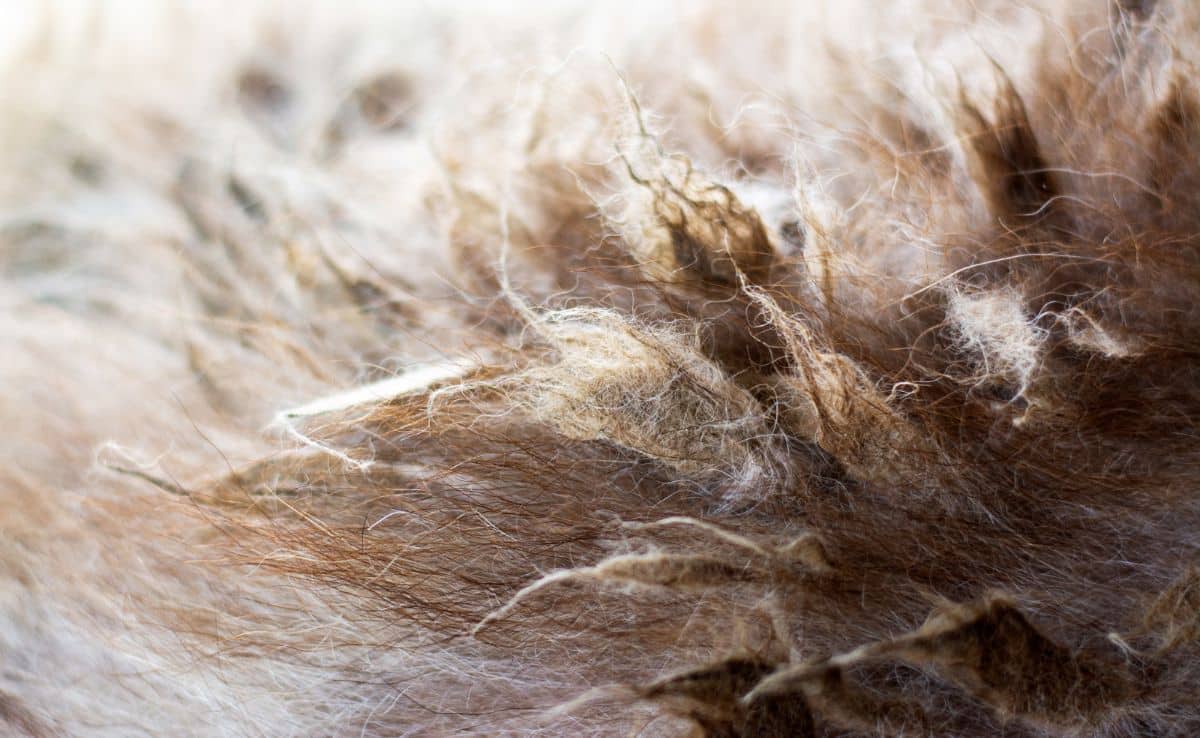
You’re petting your dog when your fingers suddenly hit something that feels less like fur and more like a tiny piece of carpet. Congratulations, you’ve found a mat.
Table of Contents
Some mats are little tangles you can safely work out at home. Others are tight, painful, or hide irritated skin underneath, and those are better left to a groomer or vet.
The tricky part is knowing which one you’re dealing with. Here’s how to remove small mats without pulling on your dog’s skin, when to stop trying, and how to keep those furry little troublemakers from coming back.

Can I Remove This Mat At Home?
Before you reach for a brush, take a closer look at what you’re dealing with. A small, loose tangle and a dense mat stuck against the skin are two very different grooming projects.
As a general rule, you can usually try working on a mat at home if it’s small, relatively loose, and you can clearly tell where the fur ends and your dog’s skin begins.
If you can gently separate some of it with your fingers without your dog flinching or trying to escape, that’s another good sign.
Here’s a quick gut check:
| If The Mat Is… | What To Do |
|---|---|
| Small and loose | Usually okay to carefully work on at home |
| Behind the ear but not tight to the skin | Work slowly in tiny sections |
| Under the legs, armpits, or belly | Use extra caution; these areas are sensitive and easy to tug |
| Tight against the skin | Call a professional groomer |
| Wet or damp | Don’t start aggressively brushing it out; wet mats can tighten as they dry |
| Covering large areas of the body | Call a professional groomer |
| Red, smelly, swollen, raw, or painful underneath | Call your veterinarian |
Your dog gets a vote, too. If they’re normally fine with brushing but suddenly flinch, yelp, growl, snap, or desperately try to get away when you touch the mat, don’t turn grooming into a wrestling match.
One useful distinction: a coat problem usually belongs with a groomer; a skin problem belongs with your vet. If you discover sores, bleeding, discharge, swelling, a bad odor, or significant pain underneath the fur, stop trying to remove the mat yourself.
What Causes Matted Hair In Dogs?
“Matting” is dense or tangled clumps of hair in a pet’s coat. Mats are more prevalent in long-haired dogs (and cats), especially during shedding season. Loose fur that isn’t removed can tangle with the surrounding coat, gradually forming a tighter, denser clump.
A few things make mats more likely to form:
- Shedding: Loose fur gets trapped instead of being brushed away.
- Scratching: Repeated scratching can twist longer hair into tangles.
- Moisture: Rain, snow, swimming, and baths can make existing tangles tighter.
- Friction: Collars, harnesses, and areas where your dog’s body rubs together can encourage knots to form.

Mats usually start with a small knot, but this can quickly turn into a large clump. Left untreated, mats get larger and more difficult to remove. As they tighten, they can pull against the skin, making removal uncomfortable or painful for your pup.
Severe matting can also trap moisture and hide irritated or damaged skin underneath. If you notice redness, swelling, sores, an unusual odor, or significant pain around a mat, contact your vet.
Where Do Mats Form?
Mats can form anywhere on a dog’s coat, but they’re especially common in places where hair is longer, moisture gets trapped, or there’s frequent friction.
Pay particular attention to:
- Behind and underneath the ears
- Under collars and harnesses
- Armpits and inner legs
- Belly and groin
- Rear end and tail
- Around the paws
Maintaining a healthy coat can prevent mats from forming, so removing excess hair through regular brushing and grooming is important.
But don’t rely on how smooth your dog’s coat looks from the outside. A brush can skim neatly over the top while small tangles are forming closer to the skin, particularly in long or curly coats.
How To Assess Your Dog’s Mats Before You Do Anything
Not every mat calls for the same approach. Location, tightness, moisture, and the skin underneath can all change your next move.
1. A Small Mat Behind The Ear
Fine hair and frequent movement make behind the ears prime matting territory. If the mat is small and loose, hold the hair near the base and gently separate the outer edges.
The skin here is thin, so if you can’t clearly distinguish the mat from the skin, leave it for a groomer.
2. Mats Under The Legs Or Belly
Armpits, inner legs, and bellies combine moisture, friction, and longer hair—which is basically a mat’s dream apartment.
These areas are also sensitive. Don’t force your dog’s leg into position or keep working if they’re repeatedly pulling away. A sudden objection to having one spot touched can signal pain or irritation underneath.
3. Painful, Tight Mats Near The Skin
If a mat feels more like a solid pad than tangled hair, put down the dematting tools.
Dense mats can pull painfully against the skin and make it difficult to tell where hair ends and skin begins. This is groomer territory. Professional clipping may be much more comfortable than trying to brush the mat apart.

4. Wet Mats
Your first instinct might be to soften a mat with a bath, but water can make an existing tangle tighter and harder to separate as it dries.
After swimming, rain, or snow, dry your dog thoroughly and avoid aggressively rubbing tangled areas with a towel.
5. Severe Full-Body Matting
Large areas of dense, connected matting are not a DIY weekend project. Trying to save the coat can mean a lot of uncomfortable pulling for your dog.
A professional groomer can determine whether the coat can be detangled or whether clipping is the kinder option. Your dog may come home considerably more aerodynamic than expected, but the hair will grow back.
6. Mats With Redness, Odor, Or Irritation
At this point, the skin matters more than the hairstyle. Contact your veterinarian if you find:
- Red, raw, or swollen skin
- Sores, scabs, or bleeding
- Moisture or discharge
- A strong or unusual odor
- Significant pain
- Persistent licking or chewing
Dense mats can hide skin problems, and repeated licking, chewing, or scratching can also contribute to the matting in the first place.
What You Need Before You Start
For a small, loose mat that you’ve determined is safe to tackle at home, gather a few basics before you start:
- Dog-safe detangling spray: Adds slip to help tangled hairs separate more easily.
- Slicker brush: Works through loosened tangles with short, gentle strokes.
- Dematting rake: Helps with stubborn sections that remain after gentler methods.
- Stainless steel comb: Checks for small tangles hiding underneath once you’re finished.
- Treats: Because your dog did not volunteer for this appointment.
You don’t necessarily need every grooming tool for every mat. Start with the gentlest option and only move up if you need to. See our recommended dematting tools below if you’re missing something from your grooming kit.
Warning: Before You Reach For The Scissors
See a stubborn mat and feel tempted to snip it off? Be careful. A tight mat can pull your dog’s skin up into the tangled hair, so what looks like a safe gap between fur and skin may not be a gap at all.
Never slide household scissors or even dog-safe grooming scissors underneath a mat or cut into one when you can’t clearly see where your dog’s skin is. Even rounded-tip grooming scissors can cut skin if the blades are positioned underneath a tight mat.
If the mat is too dense to brush apart safely, particularly if it’s sitting close to the skin, put the scissors down and let a professional groomer handle it. Your dog’s questionable haircut will grow back. A grooming injury is considerably harder to explain.
How To Get A Small Mat Out Of Dog Hair Safely: Step-By-Step
If you’ve got a small, loose mat that isn’t painful or plastered against the skin, you can often work it apart at home. The key word here is work. Trying to yank a brush straight through it usually gives you an annoyed dog and a mat that remains impressively committed to its position.
Take your time, use a light touch, and work in small sections.
Step 1. Get Your Dog Comfortable
Choose a stable, comfortable spot with good lighting where you can easily reach the mat. A nonslip surface can help your dog feel more secure, especially if they need to stand.
Don’t pin your dog down or force them into an awkward position just to reach the tangle. If you’re working around an armpit, belly, ear, or leg, adjust your position rather than stretching or holding your dog in a way that makes them uncomfortable.
And keep some treats nearby. There’s no rule saying you have to wait until the end to pay your assistant.
Step 2. Start With Your Fingers
Before reaching for a brush, gently massage and separate the mat with your fingers. Start around the outside edges where the hair is loosest rather than attacking the dense center.
You may be surprised by how much of a small mat you can tease apart this way. It also gives you a better sense of how tight the tangle really is before introducing a grooming tool.
If you can’t separate any of the hair without pulling hard, that’s useful information, too. Don’t compensate by pulling harder.
Step 3. Separate The Mat From The Surrounding Hair
Gently move the loose surrounding hair away so you can see exactly what you’re working on.
This keeps you from accidentally pulling more healthy hair into the knot and helps you determine how large the mat actually is and how close it sits to the skin.
If the mat turns out to be much larger or tighter than it initially looked, reconsider whether this is still a good DIY candidate.
Step 4. Hold The Hair Near The Skin
This small step can make a big difference in your dog’s comfort.
Use your fingers to hold the hair between the mat and your dog’s skin while you work. Your hand absorbs some of the tension that would otherwise tug directly against the skin every time you manipulate the tangle.
Think of it as giving the mat something to argue with besides your dog.

Step 5. Add A Little Detangling Spray
Apply a dog-safe conditioning or detangling spray according to the product directions. Use enough to add slip to the tangled hairs, not to soak the entire mat.
Gently work the product into the tangle with your fingers and continue separating any sections that begin to loosen.
Remember, detangler can make a workable mat easier to manage. It doesn’t make a tight, painful mat safe to brush out.
Step 6. Work From The Outside In
Now you can bring in your slicker brush.
Start at the outermost ends of the tangled hair, farthest from the skin, using short, gentle strokes. As those hairs loosen, gradually work your way deeper into the mat.
Avoid starting at the base and dragging the brush through the entire knot. That’s the dog-grooming equivalent of trying to brush long human hair by starting at the scalp and ripping straight through every tangle below it.
Keep your other hand near the base of the hair to minimize pulling on the skin.
Step 7. Bring In The Dematting Tool If You Need It
If you’ve loosened the mat but still have stubborn sections, a dematting rake can help separate them.
Use short, controlled movements rather than pulling the tool straight through the mat. Work on one small section at a time, continuing from the outside toward the skin.
If the tool repeatedly catches, you have to apply significant force, or your dog becomes uncomfortable, stop. A dematting tool is meant to help separate tangled hair—not win a battle of wills.
Step 8. Finish With A Comb
Once you think you’ve removed the mat, gently run a stainless steel comb through the area.
This isn’t just about making the coat look nice. The comb is your final check for smaller tangles hiding underneath that your fingers or brush may have missed.
If it moves through the hair without catching, you’re done.
Know When To Stop
Sometimes the best dematting technique is knowing when to put the tools down. Stop trying to remove the mat at home if:
- Your dog yelps, flinches, growls, snaps, or repeatedly tries to get away
- The skin is being pulled significantly as you work
- You discover redness, sores, swelling, bleeding, or irritation underneath
- The mat is much tighter or larger than you initially realized
- Your tools repeatedly catch, and you aren’t making meaningful progress
A mat doesn’t become safer to remove because you’ve already spent 20 minutes working on it. If you can’t make progress without causing discomfort, let a professional groomer take over.
Best Tools For Removing Small Dog Mats
The right tools can make a manageable mat much easier to work apart without repeatedly tugging at your dog’s coat. You probably won’t need everything below for one small tangle, but these are some of our favorite products for detangling, grooming, and keeping mat-prone coats under control.
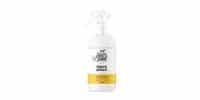
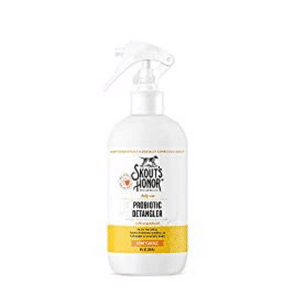
1. Dog Detangler Spray: Skout’s Honor Probiotic Detangler

A dog-safe detangling spray can make small, workable mats easier to separate by adding some slip to the hair. It won’t turn a dense, painful mat into one you can tackle at home, but it can make brushing gentler for minor tangles.
While there are many products on the market, our top pick for the best dog detangler is Skout’s Honor Probiotic Detangler. I used this on our dog and love that it’s an all-natural, non-GMO, tear-free treatment backed by a 100% guarantee (and it also gives back to dogs in need).
2. Slicker Brush: Safari Curved Firm Slicker Brush

A slicker brush is another useful tool for loosening small tangles, removing trapped shed hair, and smoothing the coat as you work. It’s also handy for regular grooming once you’ve gotten the matting under control.
The Safari Curved Firm Slicker Brush has extra-long stainless-steel pins designed to reach through longer fur and separate tangles rather than simply brushing across the surface. The pins have coated tips, and the curved head follows the shape of your dog’s body as you brush.
As with a dematting rake, don’t drag a slicker brush repeatedly through a tight mat. Use short, gentle strokes on workable tangles and stop if the brush is pulling your dog’s skin or causing discomfort.
In addition to a slicker brush, it’s a good idea to have a gentle comb like this stainless steel Andis pet comb to smooth out the hair and check your progress. It has a comfortable handle and comes in two sizes.
3. Dog Detangler Brush: Poodle Pet Dematting Fur Rake
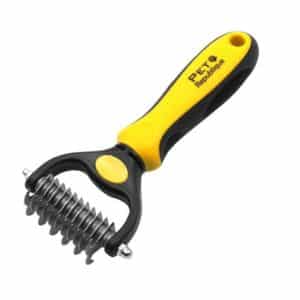
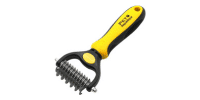
While deshedding dog brushes work great for general maintenance and excess fur removal, a stubborn tangle may need a tool specifically designed to separate matted hair. We recommend the Pet Republique Dematting Rake (or something similar), which has serrated stainless steel blades to help break up tangled hair while combing.
A dematting rake is best for small, workable mats — not dense mats stuck tightly against the skin. Start gently, and never force the tool through resistance or repeatedly rake
When It’s Time To Call A Professional Groomer
Calling a groomer doesn’t mean you’ve failed some secret dog-owner competency test. Some mats simply aren’t meant to be brushed out.
A professional groomer has the tools and experience to assess how tightly the hair is packed, how close it sits to the skin, and whether trying to preserve the coat would cause more discomfort than removing it.

A groomer is usually the better choice when:
- Several mats have formed across the coat
- A mat is dense or tight against the skin
- Matting covers a large area or connects into larger sections
- The mat is in a sensitive or difficult-to-reach location
- Your dog won’t tolerate enough handling to remove it safely
- The coat will likely need to be clipped rather than brushed out
Will My Groomer Have To Shave My Dog?
Possibly. And while the resulting haircut may not be what you had pictured, sometimes clipping a severely matted coat is much kinder than spending hours trying to save it.
How much hair needs to come off depends on how extensive the matting is and how close it sits to the skin. A groomer may be able to save some areas while clipping others shorter.
If your dog comes home looking unexpectedly aerodynamic, remember that coat grows back. The priority is removing painful matting as safely and comfortably as possible.
Some Dogs Were Practically Built To Mat
Some dogs get the occasional tangle. These dogs can seemingly grow one while you’re still holding the brush.
- Poodle: Looks freshly brushed. Is freshly brushed. Somehow has a mat anyway. Check underneath.
- Goldendoodle: The coat equivalent of cleaning your house and immediately finding another room you forgot existed. Start with the armpits.
- Cavalier King Charles Spaniel: Those glamorous ears aren’t just for looks. They’re also highly efficient tangle-storage facilities.
- Shih Tzu: Give several inches of silky hair access to the floor, a harness, a blanket, and daily life. It will find a way.
- Cocker Spaniel: Those glorious ears are basically two luxurious tangle magnets attached to a dog. Add feathered legs and armpits, and the mats have options.
- Old English Sheepdog: When your dog is approximately 30% dog and 70% magnificent shag carpet, finding a hidden mat feels less like grooming and more like an archaeological dig.
Of course, any dog can develop mats. These six just have coats that seem unusually committed to keeping their humans humble.
How To Prevent Matting In Dogs
While it’s satisfying to finally get a mat out of your dog’s hair, preventing the next one is much easier on everyone involved. Regular brushing is the biggest defense, but how often—and how thoroughly—you need to brush depends heavily on your dog’s coat.
The goal isn’t simply to make the outside look smooth. You want to remove loose hair and catch small tangles before they tighten closer to the skin and start recruiting neighboring hairs into the problem.
Long-Haired Dogs
Long coats give loose hairs plenty of other hairs to tangle with. Dogs with feathering around the ears, legs, belly, and tail can also develop mats in those areas even when the rest of the coat looks great.
For long-haired dogs:
- Work in manageable sections so long hair doesn’t hide tangles underneath neighboring fur.
- Pay extra attention to behind the ears, armpits, belly, tail, and leg feathering.
- Check underneath collars and harnesses where friction encourages tangles.
- Remove burrs, grass, and other debris after walks before the surrounding hair wraps around them.
- Run your fingers through common trouble spots between full grooming sessions. Tiny tangles are much easier to negotiate with than established mats.
A stainless steel comb can be particularly useful as a final check.
Curly-Coated Dogs
Poodles, Bichons, and many Poodle mixes can be particularly deceptive. A curly coat may look fluffy and freshly brushed on top while tangles are developing much closer to the skin.
These coats benefit from frequent, thorough grooming rather than occasional marathon sessions.
One useful technique is line brushing. Instead of brushing over a large area at once, part the coat into small sections so you can see where you’re working. Brush each section from the skin outward, then check it with a comb before moving to the next.
Focus especially on areas that experience friction, including behind the ears, beneath the collar, armpits, legs, and anywhere a harness sits.
Keeping a curly coat at a manageable length can also make home maintenance considerably easier.
If you routinely discover mats between grooming appointments, talk to your groomer about whether a shorter cut or more frequent appointments would better fit the amount of brushing you realistically want to do at home.

Double-Coated Dogs
With double-coated breeds, the trouble often starts underneath the coat you can easily see. Dead undercoat can become trapped beneath the outer guard hairs, particularly during seasonal shedding.
Regular brushing helps remove that loose undercoat before it compacts into tangles. Depending on your dog’s coat, a slicker brush, undercoat rake, or deshedding tool may be useful.
Pay particular attention during heavy shedding periods and after your dog gets wet. A thick undercoat can hold a surprising amount of moisture, so thoroughly drying the coat after swimming or bathing matters.
And don’t assume shaving is the easiest way to prevent future problems. Many double-coated breeds rely on their coat for insulation and protection, so routine shaving generally isn’t the answer to normal shedding or coat maintenance.
Senior & Less-Mobile Dogs
A dog who stayed relatively mat-free for years can become more prone to tangles as they age.
Senior dogs may spend more time lying in the same positions, creating repeated friction and compression in certain areas. Arthritis, stiffness, or other mobility changes can also make grooming positions they once tolerated uncomfortable.
For older or less-mobile dogs:
- Check the sides, hips, rear end, belly, and other areas that spend more time against bedding.
- Keep grooming sessions shorter if standing for long periods is difficult.
- Let your dog sit or lie comfortably when possible rather than repeatedly repositioning them.
- Check hard-to-reach areas more frequently instead of waiting for a full grooming session.
- Consider a shorter, easier-to-maintain trim for long or curly coats if grooming has become physically difficult.
If a previously cooperative dog suddenly resists brushing one particular area, don’t assume they’re simply becoming grumpy with age. Pain or skin irritation may be making that spot uncomfortable.
Bathing & Drying Can Make A Difference, Too
A clean, conditioned coat can be easier to brush and less prone to tangling, but what happens before and after the bath matters just as much as what you wash your dog with.
If your dog already has noticeable tangles, work through the small, manageable ones before getting the coat wet. Water can tighten existing tangles, and scrubbing or rubbing them during a bath can make them harder to separate.

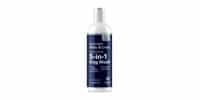
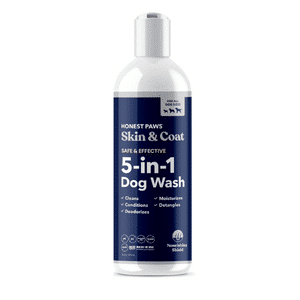
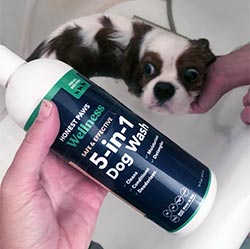
For mat-prone dogs, a moisturizing shampoo and conditioner or combination wash can help keep the coat manageable. We’ve had good results with Honest Paws 5-in-1 Dog Wash, which cleans, conditions, deodorizes, moisturizes, and detangles.
We tried it on our Cavalier King Charles Spaniel, whose long, silky coat tangles easily, and found that we could brush through the coat afterward without needing a separate conditioner or detangling spray.
After the bath, resist the urge to give your dog the full towel-dry treatment like they’re a wet kitchen counter. Vigorous rubbing adds friction and can twist longer hair together. Instead:
- Blot or gently squeeze out excess water with a towel rather than rubbing back and forth.
- Dry the coat thoroughly, paying extra attention to thick areas and places where moisture can linger.
- Check behind the ears, under the legs, around the belly, and beneath collars or harnesses once the coat is dry.
- Brush and comb through the coat so small tangles don’t get the chance to settle in.
Swimming, rain, and snow deserve the same follow-up. If your dog’s coat gets thoroughly wet, a quick check of their usual matting hotspots afterward can save you from discovering a much bigger knot several days later.
Frequently Asked Questions
Still staring at a stubborn patch of fur and wondering what to do with it? You’re probably not the only one. Here are a few more common questions about dog mats. If we haven’t answered yours, drop it in the comments below.
Do Home Remedies For Matted Dog Hair Work?
Some can help with small, loose tangles, but no home remedy is going to make a dense mat stuck against the skin safe to brush out.
Cornstarch is one popular trick. Working a small amount into tangled fur may add some slip and make the hairs easier to separate with your fingers and comb.
You may also see baby oil recommended online. We don’t recommend using it or other products that aren’t formulated for dogs, since they can irritate the skin or leave a residue your dog may lick.
Does Matted Hair Hurt Dogs?
It can. As a mat becomes tighter, it pulls on the skin underneath, and normal activities like walking, scratching, or lying down can increase that tension.
Severe matting may also trap moisture and debris against the skin or hide irritation underneath. That’s why a mat that has become tight and painful isn’t something you want to patiently pick at for an afternoon in the name of saving a little fur.
Should I Bathe My Dog Before Removing Mats?
Not if your dog already has noticeable mats. Water can make tangled hair tighten, especially as it dries, and scrubbing during the bath can make matters worse.
Deal with small, workable tangles before bathing. If the mat is too tight to safely remove, let a professional groomer handle it rather than trying to shampoo it into submission.
Why Does My Dog Keep Getting Mats Even Though I Brush Them?
You may be brushing regularly but not reaching all the way through the coat. This is particularly easy to do with long and curly coats, which can look beautifully brushed on top while tangles develop closer to the skin.
After brushing, run a comb through common trouble spots. If it catches, there’s still work hiding underneath.
Also pay attention to patterns. Mats that repeatedly appear behind the ears, beneath a harness, or under the legs may have more to do with friction and location than how often you brush the rest of your dog.
Can I Shave A Matted Dog At Home?
Routine coat clipping at home is one thing. Removing dense matting that’s sitting close to the skin is another.
Mats can pull the skin upward into the coat, making it difficult to know exactly where it’s safe to clip. Sensitive areas and a dog who moves unexpectedly add another layer of difficulty.
If your dog has extensive matting or mats that are tight against the skin, a professional groomer is the safer choice. If you want to maintain your dog’s coat between appointments, see our guide to the best dog grooming clippers.
How Often Should I Brush My Dog To Prevent Mats?
There’s no single schedule that works for every dog. Coat type, coat length, shedding, activity level, and how easily your dog tangles all matter.
Long and curly coats may need attention several times a week or even daily in mat-prone areas, while double-coated dogs may need extra brushing when they’re blowing their undercoat.
Instead of relying entirely on the calendar, let your comb help set the schedule. If you’re regularly finding little tangles between grooming sessions, shorten the time between them.
A Little Coat Maintenance Goes A Long Way
Once the mats are gone, the goal is to make sure you’re not having this same conversation with your dog’s coat again next week. The right brush, bathing routine, and grooming schedule can make mat prevention much easier, especially if your dog has a long, curly, or double coat.
For more help building a routine that fits your dog:
- Find the best deshedding brush for your dog — including slicker brushes, undercoat tools, and options for different coat types.
- Learn how to groom your dog at home — from brushing and coat trimming to nails and basic grooming setup.
- See how often you should bathe your dog — because coat length, activity level, and skin needs all change the ideal bathing schedule.
- Compare the best dog grooming clippers — useful if your dog needs regular coat maintenance between professional grooming appointments.